Ancient Fossil in China Rewrites Story of Early Animal Migration
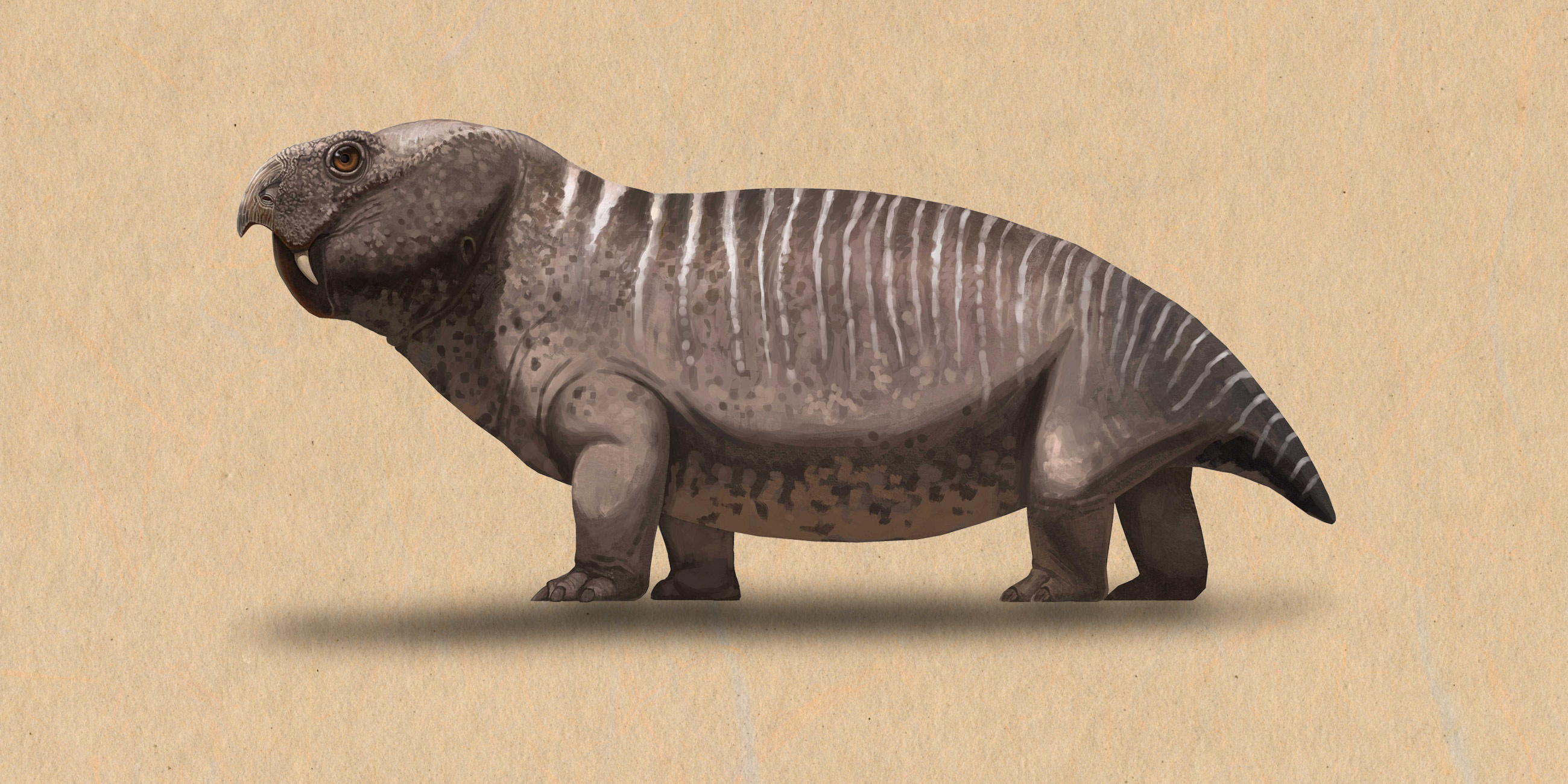
Chinese researchers have identified a new species of dicynodont — an extinct group of mammalian species that appeared long before the dinosaurs — challenging past paleontological assumptions about animal migration on prehistoric Earth.
The discovery was published Dec. 15 in the journal “Cladistics” by a research team from the Institute of Vertebrate Paleontology and Paleoanthropology under the Chinese Academy of Sciences. The team analyzed a dicynodont skull fossil excavated in northwestern China’s Gansu province.
By reconstructing dicynodont evolutionary relationships using data from previous studies and physical assessment of the skull, the team determined the fossil represents a new species, Dinanomodon guoi — named after Guo Wangang, a famous forester from the county where the fossil was discovered. The species belongs to a genus previously known only to have lived in what is now South Africa.
The findings also suggest dicynodonts originated around 261 million years ago, much later than previous estimates. Dicynodonts — meaning “two dog teeth” — lived during the Permian period, roughly 299 to 252 million years ago. They are considered distant precursors of mammals and were among the few large animals to survive the largest mass extinction in Earth’s history at the end of the Permian.
The discovery provides new evidence that land animals migrated widely when Earth’s continents were fused into the supercontinent Pangaea.
Shi Yutai, the paper’s first author, said Pangaea, as a connected landmass, should theoretically have facilitated species to spread freely. However, the supercontinent eventually broke into two continents, and fossil evidence shows little overlap between the two continents in four-footed animals of the same genus. It is believed that this was due to the extensive deserts at low latitudes on Pangaea, which may have limited movement before the supercontinent broke apart.
The new dicynodont fossil suggests that between roughly 259 million and 254 million years ago, a moist and habitable corridor may have existed across low-altitude regions of Pangaea that allowed animals to move between the Northern and Southern Hemispheres.
The finding may also help explain why fossils of early amphibians and reptiles have been discovered far from their presumed places of origin. Liu Jun, who led the fossil excavation, told domestic media that the discovery indicates the Late Permian ecosystem in what is now Gansu was teeming with life and capable of supporting large land animals like dicynodonts.
Editor: Marianne Gunnarsson.
(Header image: An artist’s rendering of D. guoi by Ye Jianhao. Visuals from Institute of Vertebrate Paleontology and Paleoanthropology, reedited by Sixth Tone)